Species concerned, mosquitos wake up in spring and how to protect yourself
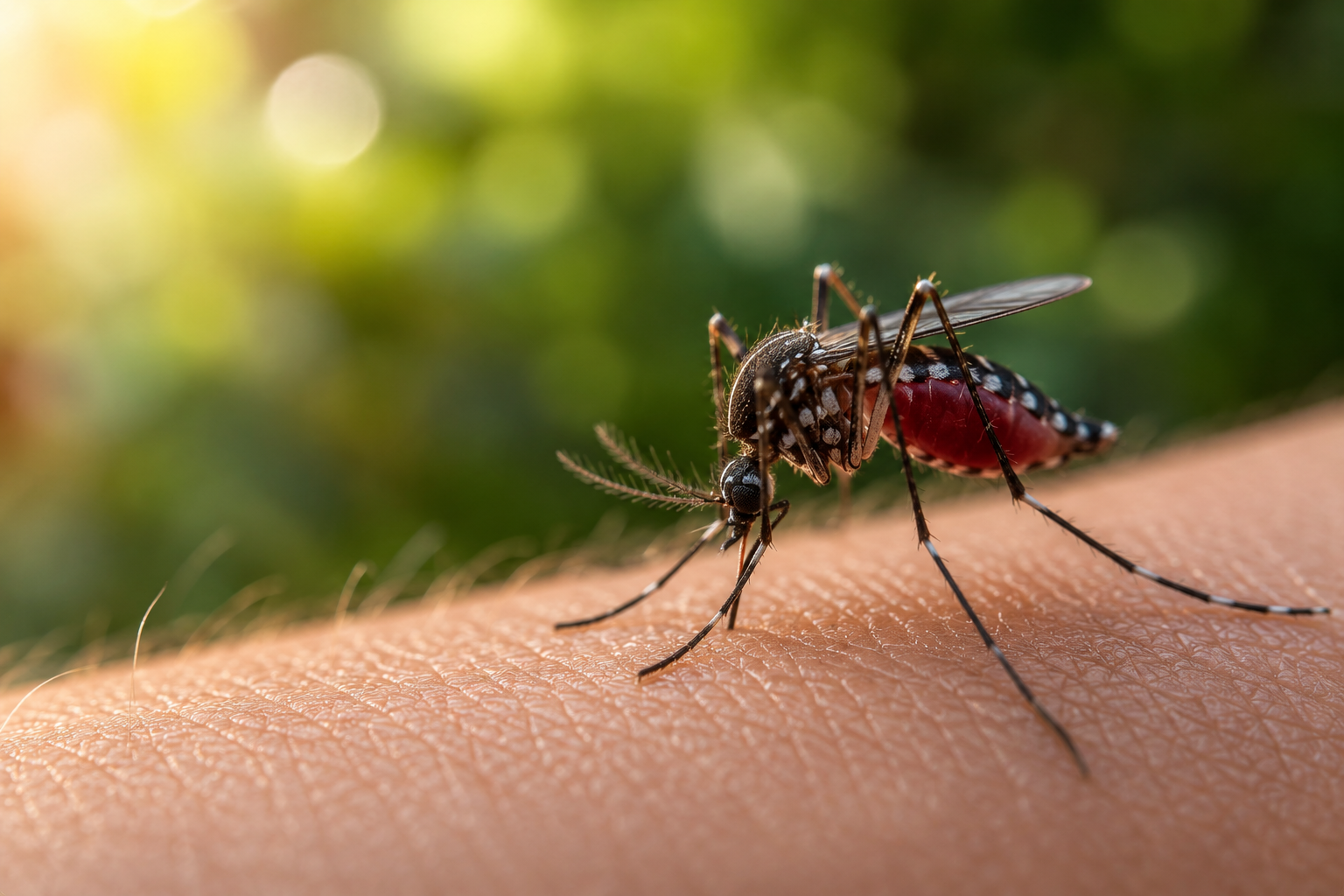
With the lengthening of the days and the rise in temperatures, spring marks the resumption of activity for many species... and in particular the gradual awakening of mosquitoes.
This period corresponds to the gradual return of several mosquito species. Depending on the climatic conditions and the biology specific to each species, they come into activity at different periods.
How can we anticipate this return in order to better protect ourselves from it? Explanations.
Why do mosquitos reappear in spring
Their survival strategy during the winter: diapause
The dynamics of mosquito populations are strongly influenced by winter.
To get through this season, their biology allows them to enter a state of hibernation called diapause (temporary cessation of biological development).
This phenomenon is not a simple pause linked to the cold: it is a mechanism genetically programmed, triggered well before winter, usually when the length of the day decreases in the fall.
In spring, the release of diapause varies according to the species and according to the climatic conditions to which they are exposed.
The tiger mosquito: a spring outbreak after winter
When do tiger mosquito eggs hatch?
The tiger mosquito (Aedes albopictus) spend the winter in the form Diapausing eggs.
At the end of summer and autumn, the females lay so-called “diapausant” eggs, which are particularly resistant. These eggs can withstand very low temperatures and remain viable for several months.
Their hatching is timed to coincide with the return of favorable conditions.
It does not generally intervene only after a period of cold winter and when the daytime temperatures permanently exceed a certain threshold, often between April and May depending on the region.
The common mosquito: adult females that winter
How some species spend the winter in cellars and shelters
In the common mosquito (Culex pipiens), the strategy is different.
These are the adult fertilized females which enter into a diapause as early as autumn.
They take refuge in humid and cool places but protected from frost:
- cellars
- garages
- shelters
- warren
In spring, they come out of this lethargy and resume their activities.
They then immediately need Of a blood meal, necessary for the development of their first eggs.
Some species hatch massively after spring rains.
Other species, including some Aedes, spend the winter in the form of eggs laid in wetlands likely to be flooded.
Their hatching is triggered by:
- The rise in the water level
- Rising temperatures
These conditions can cause very important synchronous emergences, sometimes as early as the beginning of spring.
Why does the appearance of mosquitoes vary from year to year
The diversity of diapause strategies explains why the timing of mosquitos appearance can vary from year to year.
Mosquitos wake up in particular depend on:
- Temperatures
- Rainfall
- Of the length of the day
- the presence of larval sites.
Understand the relationship between biology of species and climatic conditions is therefore essential to anticipate periods of nuisance.
The BioBelt approach: model the fight on species biology
Faced with this biological complexity and this variable emergence schedule, traditional control methods often show their limits.
They are often triggered:
- Too late
- uniformly
- without taking into account the specific biology of species.
This is precisely where the expertise of BioBelt.
A predictive model based on entomology and climate data
Thanks to a detailed knowledge ofentomology (insect science) and the behavior specific to each mosquito species, BioBelt has developed a predictive model.
This model doesn't just look at the calendar.
It correlates in real time:
- The evolution of temperatures
- The precipitations
- the specific biology of each species
- their periods of exit from diapause.
Determine the optimal time to activate capture
Concretely, the BioBelt system analyzes the data in order to:
Precisely determine the start of the catch period for each target species.
For example, the system does not trigger the broadcast of CO₂ in the traps only when the females are really active and likely to respond to this attractive signal.
Adapt the catch to emergence peaks
The model also allows to dynamically adjust the capture intensity depending on the real pressure of the populations.
In particular, it can anticipate the peaks of emergence observed after certain spring rains in species such as Aedes caspius.
Climate change is speeding up mosquitos to wake up
In the current context of climate change, there is a trend towards a Resumption of activity earlier in several species.
Milder winters lead to:
- earlier exits from diapause
- faster development cycles
- a longer period of nuisance.
Ongoing entomological surveillance
Faced with these rapid developments, BioBelt ensures meticulous and continuous monitoring of populations in the field.
This Permanent entomological watch makes it possible to refine predictive models in real time, as close as possible to the life traits of mosquitoes.
The fight does not target a static enemy, but populations whose behavior changes with climatic conditions.
A targeted fight, launched at the right time
By integrating biological and climatic data, BioBelt offers an approach proactive and perfectly targeted.
The fight is no longer launched in a systematic way.
She intervenes only when the biology of mosquitoes requires it, thus optimizing the operational efficiency of the devices.